

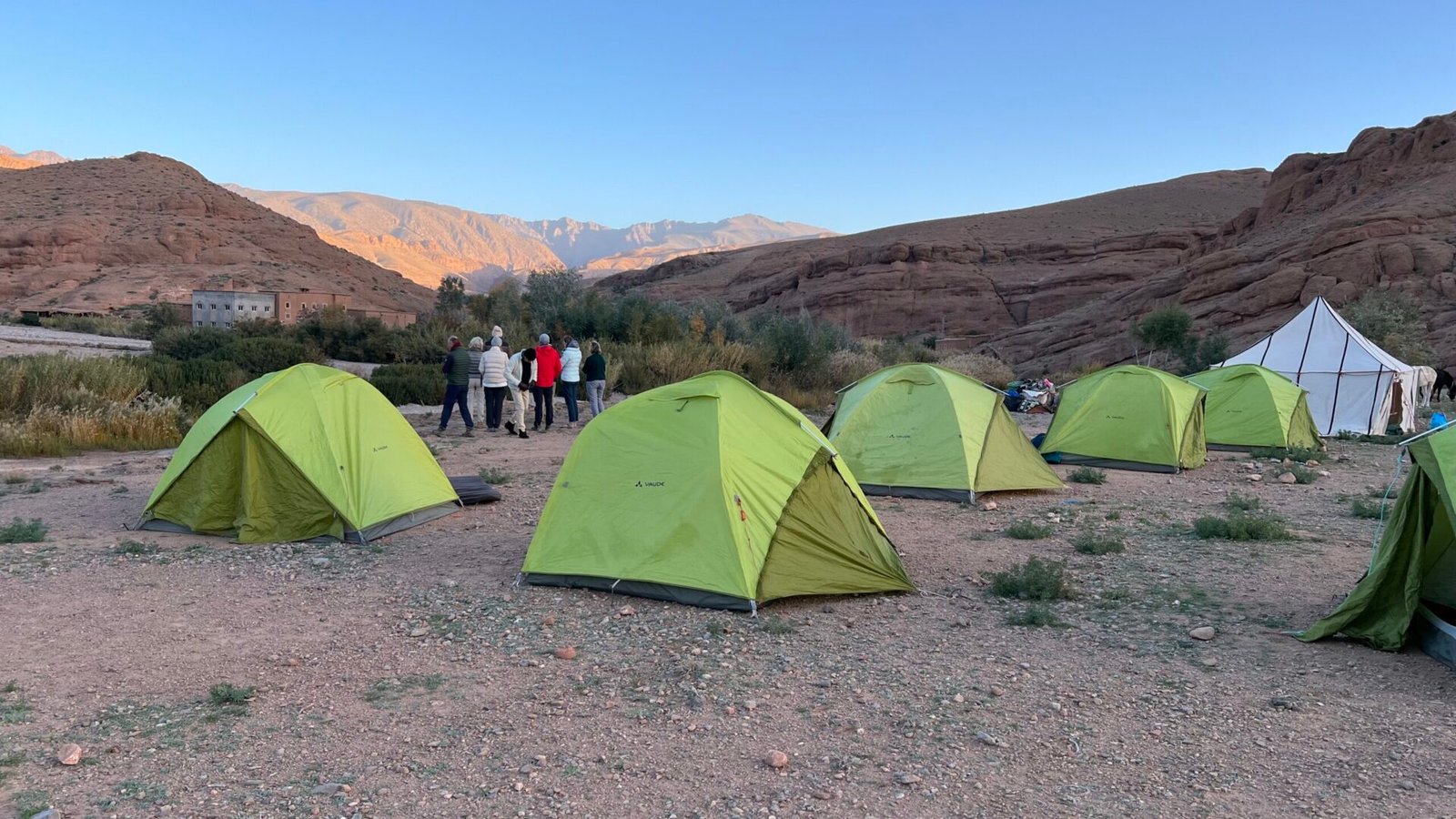
On a guided trek in Morocco you carry only a daypack with water, snacks, sun protection and a warm and a waterproof layer, while mules carry your main bag between villages, refuges and camps. Pack broken-in boots, layers that work from hot afternoons to near-freezing nights, a sleeping bag for camping nights, and loose clothes that cover your shoulders and knees for walking through Berber villages.
Key takeaways
- Two bags: a 25–35 litre daypack on your back and a soft duffel or rucksack for the mules.
- Layers beat bulk: even in summer, nights above 3,000 m can be close to freezing.
- Season matters: winter Toubkal needs crampons and an ice axe; desert treks call for a scarf, sun-proof clothing and warm night layers.
- Respectful clothing: cover shoulders and knees in villages; loose, non-transparent clothes are both polite and practical.
- Provided on camping treks: tents, mattresses, cooking equipment and meals; you bring personal gear and a sleeping bag.
How luggage works on a guided trek in Morocco
On almost every multi-day trek in the Atlas, mules and their muleteers carry the main luggage, the food and the camping equipment; in the Sahara, camels do the same job. You walk with a daypack only, and you usually will not see your main bag again until the evening, as the mules move at their own pace and sometimes take a different path. That shapes how you pack:
- Use a soft duffel bag or rucksack for the main luggage. Hard suitcases are awkward to strap onto a mule and easily damaged.
- Keep it reasonable. Mules carry a lot, but they share the load with food and kitchen gear, so ask us for the weight guideline on your route.
- Leave extras in Marrakech. Riads and hotels can usually store a suitcase while you are in the mountains.
- Pack your daypack for the whole day: anything you might need between breakfast and camp goes on your back.
What goes in your daypack
- Water bottles or a hydration bladder holding about 2–3 litres
- Snacks such as nuts, dried fruit or energy bars
- Sun hat, sunglasses, high-factor sunscreen and lip balm
- A fleece or light insulated jacket, plus a waterproof jacket
- A small first-aid kit with blister plasters and your personal medication
- Toilet paper, hand sanitiser and a small bag to carry rubbish out
- Phone, camera and your passport (needed for registration on Toubkal)
- Some cash in dirhams for drinks, small purchases and tips
What goes in the main bag
- Sleeping bag, plus a liner for refuges and gîtes
- A warm down or synthetic jacket for evenings and summit mornings
- Spare base layers, socks and trekking trousers
- Warm hat and gloves
- Light shoes or sandals for camp and guesthouses
- Headlamp with spare batteries, and a power bank, as charging points are limited in the mountains
- Toiletries, a quick-dry towel and earplugs for refuge dormitories
Footwear and clothing: the core list
Boots and socks
Your boots are the most important item you pack. Choose hiking boots with good ankle support and a grippy sole, and wear them in before you travel: Atlas trails are rocky, and descents such as the one from Toubkal to Imlil are long. Bring wool or synthetic hiking socks rather than cotton. On routes with river crossings, such as the Tassaout valley or parts of the Rose Valley, add water shoes or sport sandals.
Layers
Morocco’s mountains swing from hot sun at midday to cold wind at dusk, so think in layers: a moisture-wicking base layer (synthetic or merino, not cotton), a fleece or light insulated mid-layer, a warm puffy jacket for camp and a waterproof, windproof shell. Lightweight trekking trousers work in every season, and a long-sleeved shirt protects you from the sun better than any sunscreen.
Sleeping
In the Toubkal refuges and in village gîtes, blankets are normally provided, but a sleeping-bag liner or light bag adds comfort and hygiene. On camping treks we provide tents and mattresses, and you bring a sleeping bag. A three-season bag comfortable to around 0°C suits most spring and autumn camps; for winter treks in the Saghro or high camps in the Atlas, bring a warmer one.
Season-by-season packing additions
| Season | Typical conditions | Add to the core list |
|---|---|---|
| Spring (March–May) | Warm days, cool nights, showers; snow possible above 3,000 m early in the season | Reliable waterproof jacket, warm hat and gloves, gaiters for snow patches on Toubkal in April |
| Summer (June–August) | Hot valleys, pleasant at altitude, cold dawns on summits, afternoon thunderstorms | Wide-brimmed hat, extra water capacity, electrolyte sachets, light long sleeves; still pack a warm jacket for the refuge and summit |
| Autumn (September–November) | Settled, clear weather, cooler nights and shorter days | Warmer sleeping bag from late October, an extra mid-layer, headlamp with fresh batteries |
| Winter in the High Atlas (December–March) | Snow and ice on high ground, temperatures well below freezing | Crampons, ice axe, stiff winter boots, insulated gloves, four-season sleeping bag; your guide confirms the list |
| Winter in the Saghro and Sahara (November–March) | Mild, sunny days, cold or freezing nights, wind in the desert | Down jacket and beanie for camp, a three-season or warmer bag, a desert scarf (chèche) against sun and sand, good sunglasses |
Every route has its own small quirks. The 2-day Mount Toubkal trek needs proper cold-weather layers for the pre-dawn summit start, the 6-day Toubkal circuit via Lac Ifni a warm sleeping bag for nights by the lake, the 8-day Berber homestay trek water shoes for walking in the Tassaout river, the 5-day Jebel Saghro trek a three-season bag for cold winter camps, and the 8-day nomadic Sahara trek a chèche and footwear suited to sand. A detailed equipment list is sent after booking.
What to wear in Berber villages
Rural Morocco is warm and welcoming, but also conservative, and what you wear is noticed. Clothes that respect local customs are easy to pack and are often the most practical choice for trekking anyway.
- Cover shoulders and knees. T-shirts and trekking trousers are ideal for everyone; men should avoid walking shirtless, and shorts are best kept for high trails away from villages, if worn at all.
- Choose loose, non-transparent fabrics. Tight or sheer clothing draws attention, and loose layers are cooler in the sun.
- Bring a light scarf. Women do not need to cover their hair, but a scarf is handy for sun, dust and visits to family homes.
- Swim discreetly. At waterfalls and rivers near villages, keep a T-shirt or shorts over your swimwear.
- Shoes off indoors. Remove your shoes when entering a home or guesthouse room, and always ask before photographing people.
What to leave at home
- Hard suitcases on the trek itself; leave them at your hotel.
- Too much cotton, which stays wet and cold after sweat or rain.
- Valuables and jewellery you do not need in the mountains.
- Drones, which require special authorisation in Morocco and are often held at customs on arrival.
- Single-use plastic bottles; bring a reusable bottle and ask your team about drinking water on your route.
Not sure what your trip needs? Message us on WhatsApp at +212 606 957 514 or via our contact page with your route and dates, and our local guides will tell you exactly what to bring, and what you can leave behind. Find your next route on our mountain trekking and Berber villages pages.
FAQ
Only a daypack. On our guided treks, mules in the mountains or camels in the desert carry your main bag between overnight stops, so you walk with water, snacks and the layers you need for the day.
Yes for camping nights: tents and mattresses are provided, but you bring your own sleeping bag. In refuges and gîtes blankets are usually available, though a liner or light bag adds comfort.
Loose, comfortable clothes that cover shoulders and knees, such as trekking trousers and a T-shirt or long-sleeved top. A headscarf is not required, but a light scarf is useful for sun and dust.
Crampons, an ice axe, stiff winter boots, insulated gloves and a warm down jacket, as snow and ice usually cover the upper mountain from about December to March. Your guide confirms the exact list before you travel.