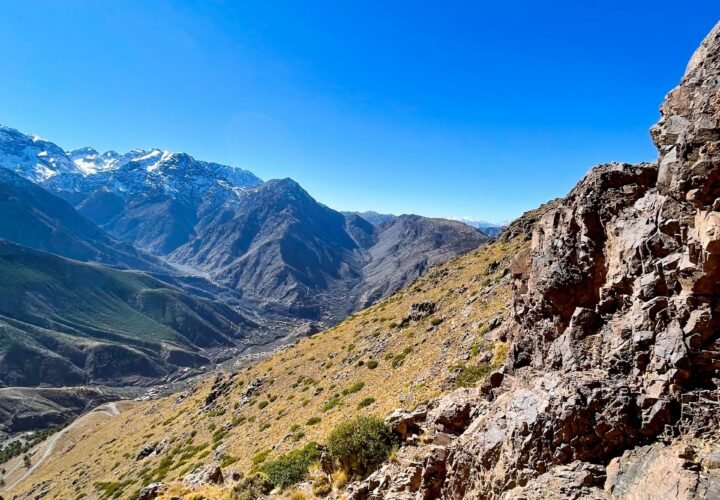
Mountain Trekking · High Atlas
8-Day Toubkal and M’Goun Trek: Two 4,000 m Summits of the High Atlas
PriceOn requestQuote in a few hours
Details

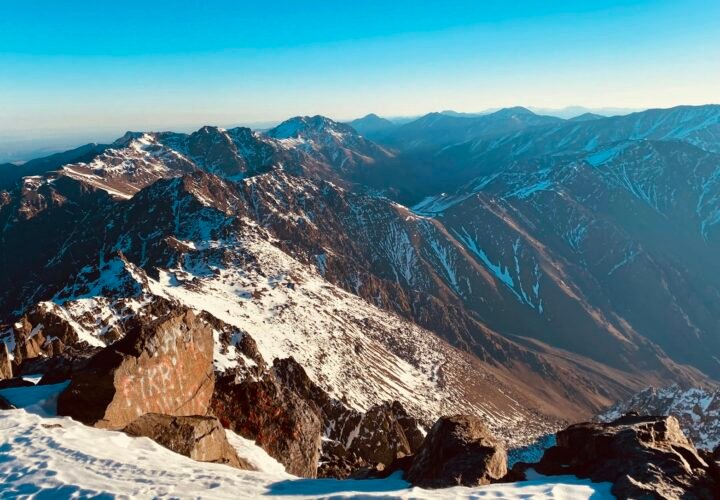
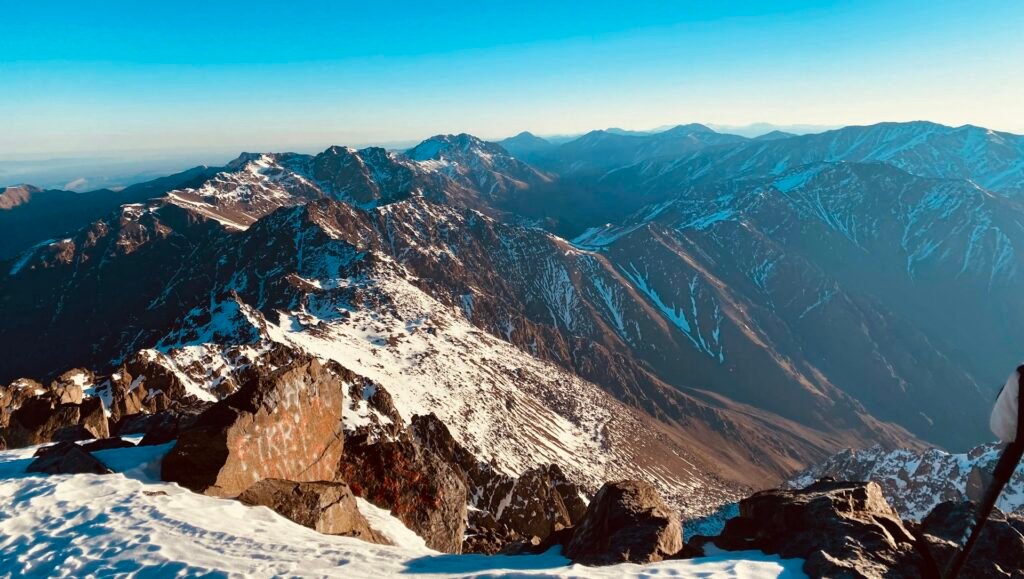
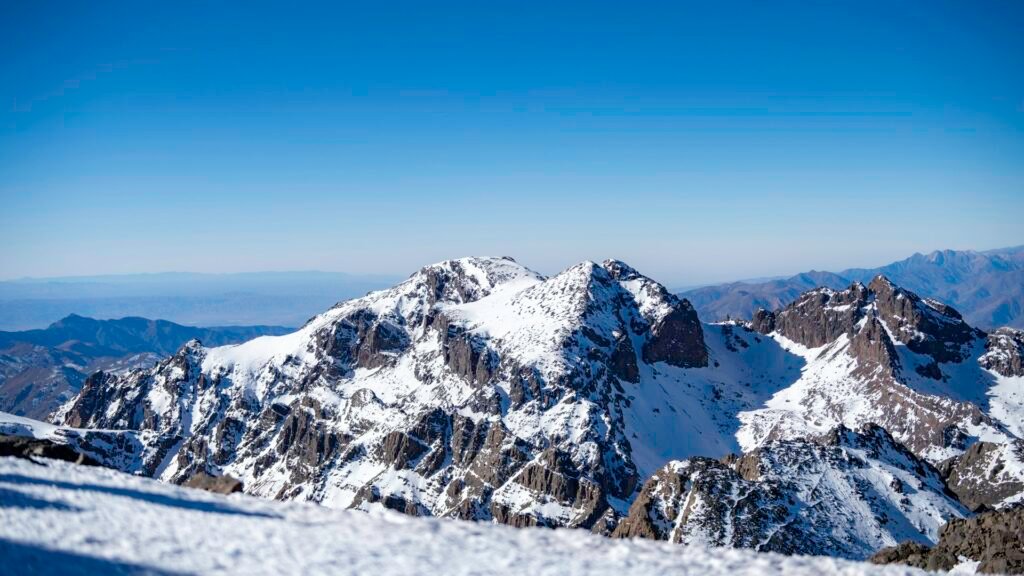
Mount Toubkal (4,167 m) is the highest summit in North Africa, and this two-day trek is the quickest way to stand on top of it from Marrakech. In a single night away you travel from the city to the Berber village of Imlil, walk up the valley to the Toubkal Refuge and set off before sunrise for the summit, returning to Marrakech by late afternoon on the second day.
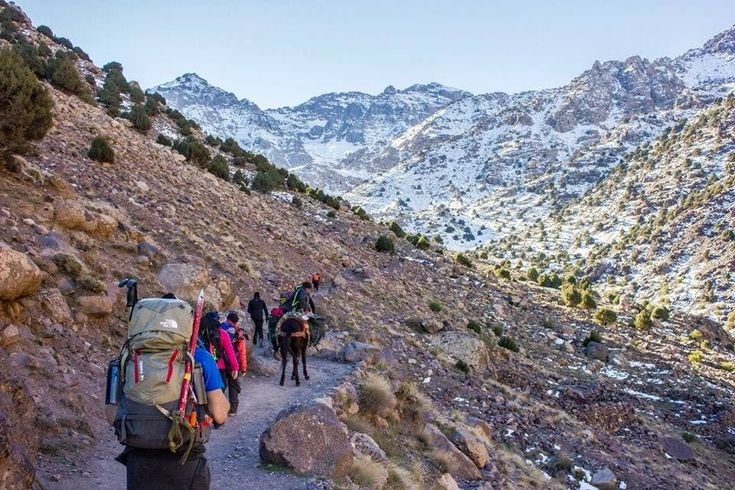
Day one is a steady climb from Imlil (1,740 m) past stone villages and the shrine of Sidi Chamharouch, with a picnic lunch on the way, to the refuge at 3,200 m. Sleeping at this height helps your body adjust before the big day. On day two you start walking at 5:30 for around four hours of ascent on a well-trodden path, take in the panorama from the top and descend the same way to Imlil.
The trek is short but demanding because of the altitude and the steep terrain, so it suits fit, active walkers with some hiking experience. A local mountain guide and a cook travel with you, mules carry the luggage and supplies, and all meals, the refuge night, trekking permits and transport from Marrakech are included. The best months are April to October. Prices are on request, based on season and group size.
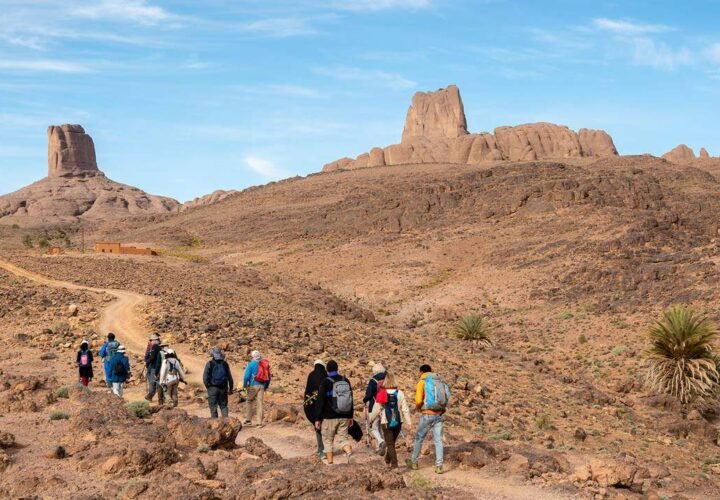
Your driver collects you from your hotel or riad in Marrakech at around 8:00 (please be ready from 7:00) for the 65 km drive south to Imlil, a Berber village at the foot of the High Atlas. There you meet the muleteers, who load the bags, food and supplies, and set off on foot with your mountain guide. The path climbs past small villages and the shrine of Sidi Chamharouch to above 2,400 m, where the cook serves a picnic lunch. In the afternoon you continue up to the Toubkal Refuge at 3,200 m for mint tea, a shower, dinner and an early night.
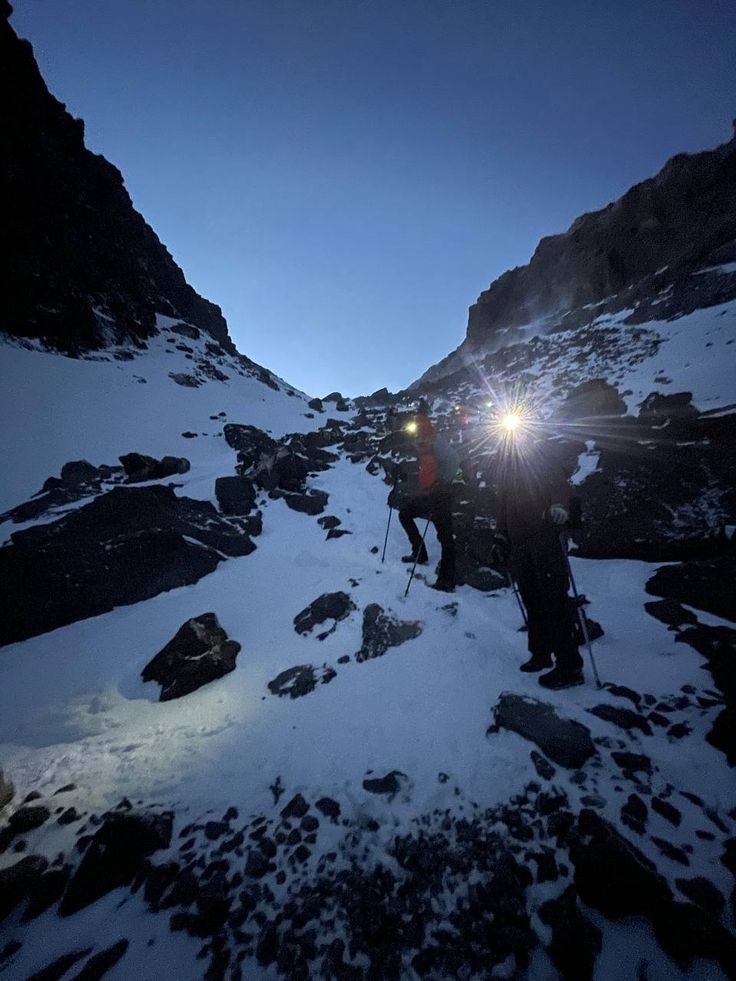
Breakfast is served at 5:00 and you start walking at 5:30, headlamps on as the sky begins to lighten. The climb takes about four hours of steady ascent with one short break, and your guide hands out snacks and water along the way. On the summit you have around 45 minutes to rest, take photos and enjoy the view across the Atlas. You descend by the same route to the refuge for lunch, then continue down to Imlil and drive back to Marrakech, arriving at about 17:00.
It is challenging, mainly because of the altitude and the steep climbing. Summit day involves about 4 hours of ascent and 3–4 hours of descent, so you need good fitness and some hiking experience.
April to October is best, when the weather is more stable and the trail is mostly free of snow. Summer is warmer but busier, while spring and autumn are quieter and often more pleasant.
You spend the night at the Toubkal Refuge (3,200 m) in dormitory-style rooms with beds, blankets and shared bathrooms. In summer, tents may be used instead.
Begin regular cardio training such as running, cycling or hiking at least 2–3 months before the trek. Pack sturdy boots, warm layers, a waterproof jacket, a headlamp and personal medication; a full equipment list is sent after booking.
It can be, as symptoms may appear above 2,500 m. The night at 3,200 m helps acclimatisation, your guide can slow the pace or change plans if needed, and drinking plenty of water makes a real difference.
Your guide may postpone or cancel the summit if conditions are unsafe. Depending on the situation, the trek can be extended by a day or an alternative activity offered.