Mountain Trekking · High Atlas
8-Day Toubkal and M’Goun Trek: Two 4,000 m Summits of the High Atlas
PriceOn requestQuote in a few hours
Details

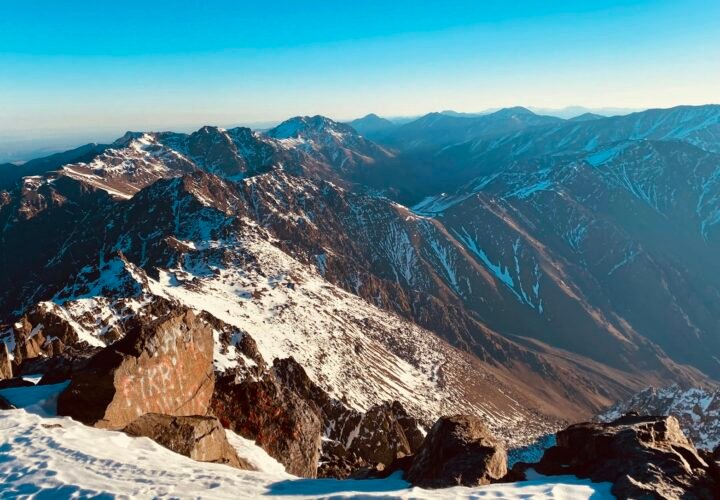
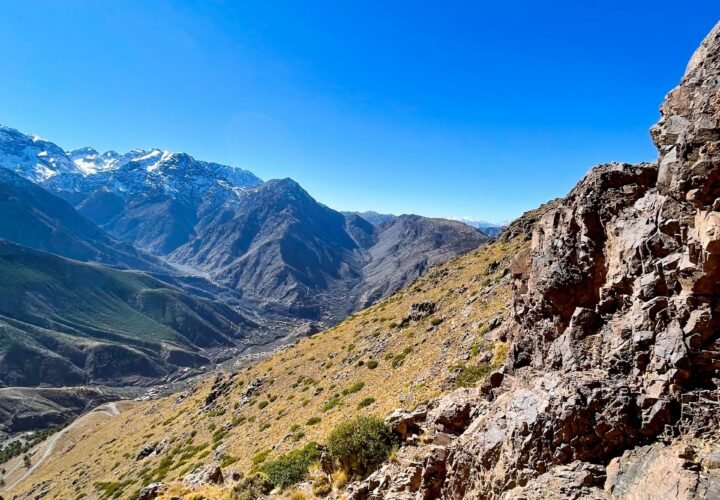
When snow covers the High Atlas, Jebel Saghro comes into its own. This volcanic range sits between the High Atlas and the Sahara, and its mild, dry winters make it one of the best trekking areas in Morocco from October to April. Over five days from Marrakech you walk through a landscape of rock pinnacles, quiet valleys, small oases and remote Berber villages, with views back to the snowy peaks on the northern horizon.
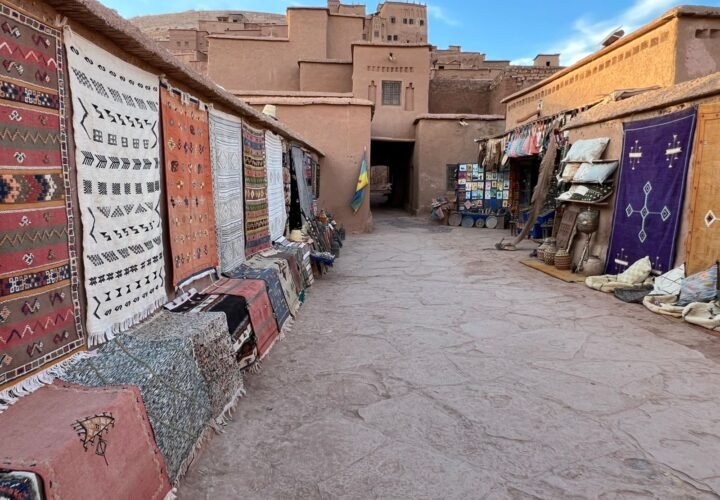
After a drive over the Tizi n’Tichka pass and lunch in an old kasbah of the Draa Valley, you spend the first night in Nkob, a village famous for its earthen kasbahs. Three days on foot follow: through the Ousdidn Valley to the pinnacles of Bab n’Ali, across the volcanic needles of Tadawt n’Tblah to a river camp at Ighazzoun, then over the Tizi n’Olhyan pass into the Tifdassine Valley and the village of Handor. The summit goal of the range is Amalou n’Mansour, its highest peak at 2,712 m.
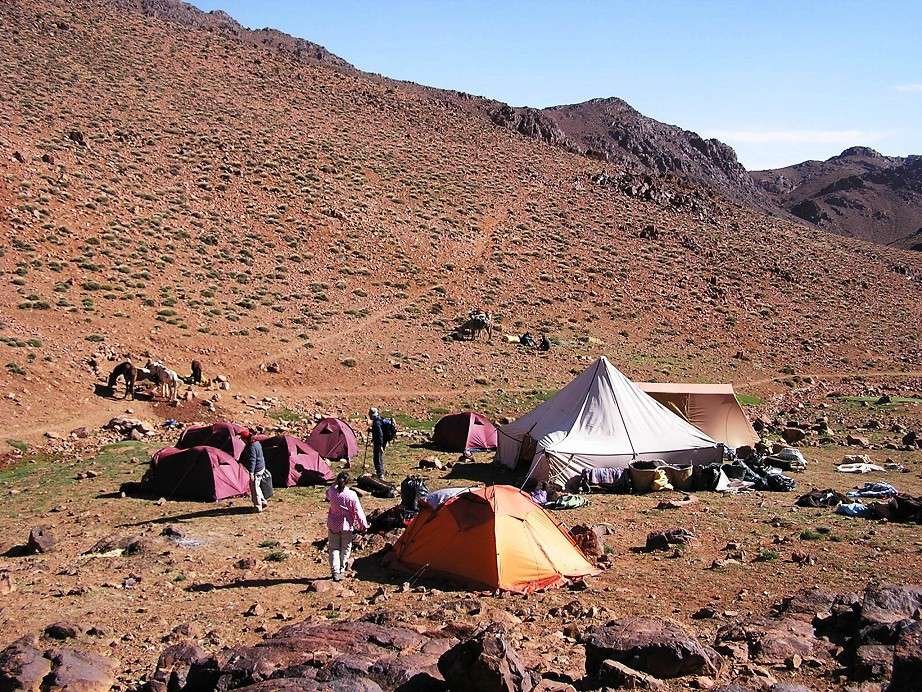
Expect 5 to 6.5 hours of walking a day, with some steep and rocky sections but no technical climbing. You sleep in village gîtes and camps, while mules and muleteers carry the bags and a cook prepares every meal on the trek. Transfers from and to Marrakech and an experienced mountain guide are included. The price is on request and depends on the season and the size of your group.
Morning pick-up from your accommodation in Marrakech. The drive crosses the High Atlas by the Tizi n'Tichka pass (2,260 m) and descends towards Ouarzazate and the Draa Valley, a long ribbon of palm groves and earthen villages. Lunch is served in an old kasbah in the valley before the road turns east to Nkob, a village at the foot of Jebel Saghro known for its many kasbahs. Time to settle in and meet your trekking team. Overnight in Nkob.
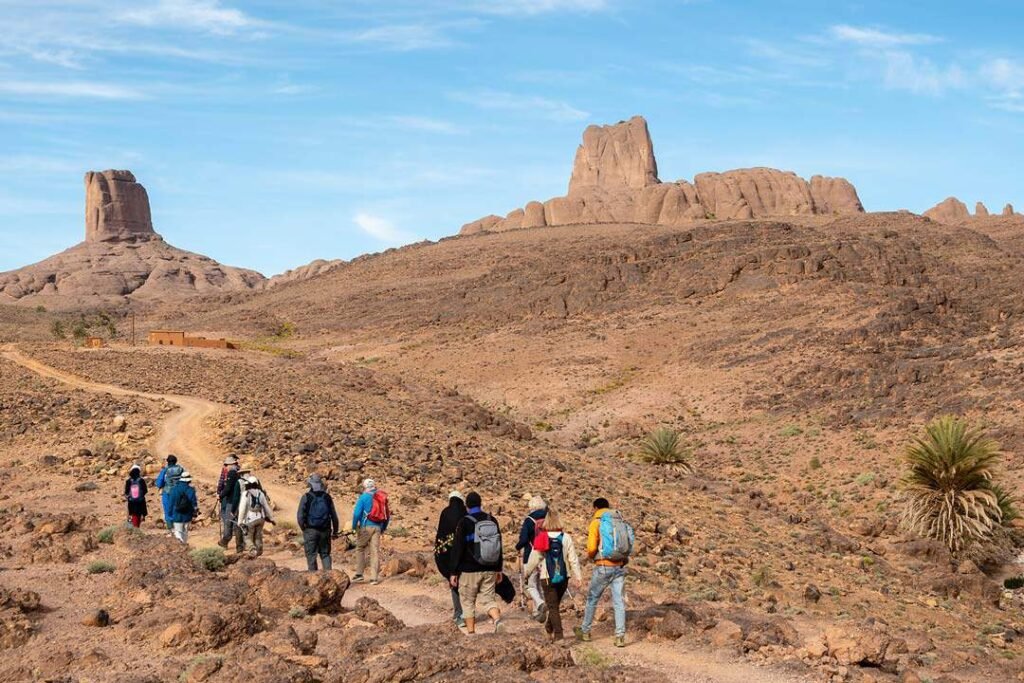
The mules are loaded and the trek begins, leaving Nkob for the volcanic heart of the Saghro. The path climbs gradually through stony hills and side valleys to the Ousdidn Valley, where lunch is taken. In the afternoon, the trail continues to the dramatic pinnacles of Bab n'Ali, two rock towers that rise like a gateway above the plateau. Camp is pitched at their foot in time for sunset. Walking time: about 6.5 hours. Overnight: camping.
Today the trail threads between the Bab n'Ali pinnacles and continues across Tadawt n'Tblah, a landscape of volcanic needles, ridges and wide basins that changes colour as the sun moves. This is Ait Atta country, and you may cross paths with shepherds and their flocks along the way. The day ends at Ighazzoun, where camp is set beside the river. Walking time: about 6 hours. Overnight: camping.
Leave the river camp and climb to the Tizi n'Olhyan pass, which opens a broad view over the Saghro ridges. The descent leads into the Tifdassine Valley, where the trail passes a string of Berber villages and gives a close look at daily life in these remote communities. The walk ends in the village of Handor, your base for the last night of the trek. Walking time: about 5.5 hours. Overnight: gîte in Handor.
After breakfast, say goodbye to the muleteers and drive back via Nkob and the Draa Valley to Ouarzazate for lunch. The afternoon takes you over the High Atlas one last time, with photo stops on the Tichka road as the landscape turns from desert tones to green mountain valleys. Arrival at your hotel or riad in Marrakech in the evening, after a final day on the road through southern Morocco.
It is moderate, with 5 to 6.5 hours of walking a day, some steep and rocky sections and no technical climbing. The summit push to Amalou n'Mansour is the most demanding part.
Because it stays mild and dry while the High Atlas is under snow. From October to April, daytime temperatures are usually 15 to 25°C.
A mix of village gîtes and camping. Tents, mattresses and cooking equipment are provided; you bring your own 3-season sleeping bag.
Saghro is a volcanic range between the High Atlas and the Sahara, with rock pinnacles such as Bab n'Ali, remote villages and very few other trekkers.
The region is home to the Ait Atta Berbers, many of them shepherds. Please dress modestly and always ask before taking photos of people.